• Home
  • Disclosure Policy
  • My Pets/Pet Products Reviews
  • About Me/Media Kit
  • Movies/Entertainment
  • Aging/Disability
  • Fashion/Beauty
  • Recipes/Kitchen Reviews
  • 2025 Holiday Gift Guide
  • #Pittsburgh’s Kennywood & Sandcastle Discounts & Reviews

Tammie's Take~

Sharing The Best/Worst Of My World and Pittsburgh, Too

You are here: Home / Archives for sciences

How to Avoid These 9 Homeschool Science Mistakes

2016 Holiday Gift Guide · April 17, 2020

This post is sponsored by College Prep Science. Copyright 2020 by Greg Landry. 

Education has always been a big deal for me. My Dad was working on his doctorate degree when he died Because of this I love reading learning tips. I still use my computer try and learn new things and learn new ideas.
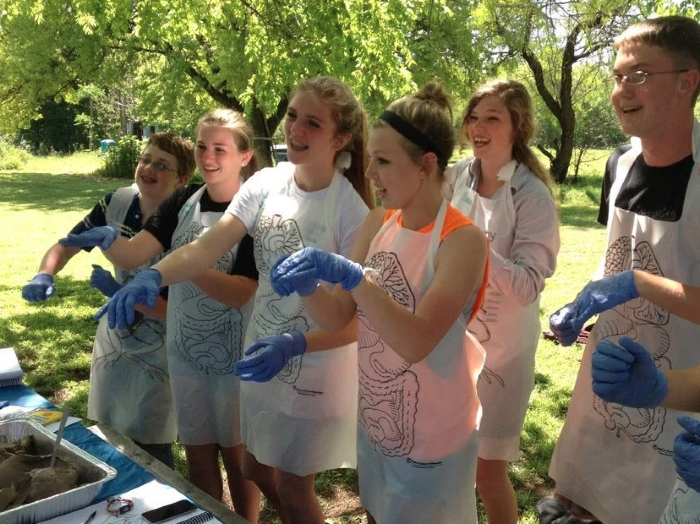
Having taught science to several thousand homeschooling and college students over the past 20+ years, several things stand out to me. I’ve put together a list of 9 homeschool science mistakes and 9 concrete steps we can take to better prepare our budding scientists.

Mistake #1 – Generalizing the names for, and thus the way we teach, science. Call it Biology, Chemistry, Physics, etc. and not “General Science”, “Physical Science”, etc., even in the young grades. Doing this virtually eliminates the intimidation that comes with “Physics” etc. in the high school years and clarifies what you’re teaching in the middle grades.

For example, at College Prep Science, rather than a homeschool year of “Physical Science,” we teach a semester of “Pre-Physics” and a semester of “Pre-Chemistry.” Rather than a homeschool year of “Life Science,” we teach a semester of “Pre-Biology” and a semester of “Pre-Anatomy and Physiology.”

Mistake #2 – Not doing enough testing.

Testing in the sciences prepares our students for the rigors of high school level homeschool science, college science, standardized testing, and assures that they are learning the material and how to take tests. Of course, it should be age-appropriate, but we should be testing.

​Mistake #3 – Teaching science year-round.

I know that many parents are proponents of year-round school (no summer break), but I believe it’s actually counter-productive. From experience with thousands of students, I believe that students need to know they can work hard for a prescribed period of time and then have a total break from classes for a while.

Mistake #4 – Not starting the high school sciences early enough.

I know it’s easy to put off starting the high school sciences, but it’s important, especially if the students may be a college science major. Critical decisions should be made going into 8th grade. The critical factor is being ready for standardized testing and being able to fit in the needed sciences in the high school years. High school Biology should be taken in the 9th grade for most students and in the 8th grade for very capable students who will likely be science majors.
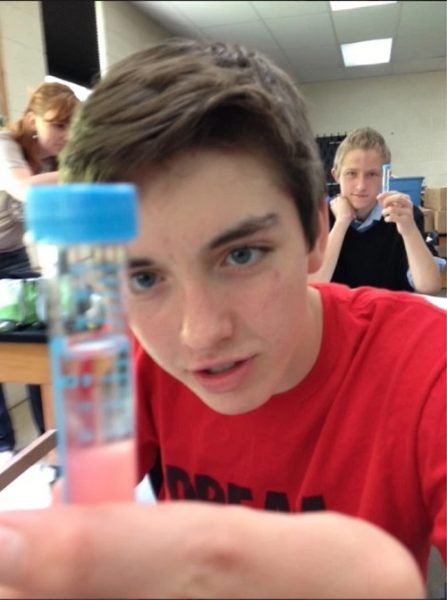
Mistake #5 – Not beginning to take the ACT early enough.

Success on this standardized test is critical for college admissions and plays a direct role in how much financial aid a student will receive. Taking these tests twice per year beginning in 9th grade gives students experience and confidence which enables them to do well when they take this test for the final time in 11th or 12th grade. See my article on this topic, “6 Reasons to Ditch the SAT and Laser Focus on the ACT.”

Mistake #6 – Not training students to write good lab reports.

As a college professor, I saw the pain of students who came in as science majors without good lab report writing skills and experience. Students get better at this with experience – there’s no substitute for that. Lab reports are simply the written record of the scientific method. It takes lots of practice to develop the skill needed to do well on these.

Mistake #7 – Not creating a lab manual for every science class.

A lab manual is a collection of observations, data collection, and lab reports from a class. This gives students one place to neatly keep all of this information and gives them a sense of accomplishment. It’s impressive to have them lined-up on a shelf from all of their science classes. It’s also required by some states or umbrella groups for homeschoolers and some colleges want to see lab manuals as evidence of labs being completed.

Mistake #8 – Being squeamish on Creation.

Despite what you may hear in the media and elsewhere, God wrote the book on science. We need to boldly teach our students about God’s creation. Science and the world around us support biblical creation.

Mistake #9 – Not using graphing extensively.

Graphing, when done regularly through the middle and high school grades has a unique ability to develop critical thinking skills in students that not only benefit them in math, science, and academics in general, but also in life! We encourage families to have students construct one graph daily as part of their homeschooling day. They can graph anything. Let them run with it and you will be surprised at how creative they are. The resulting skills can be very beneficial.

​Homeschool dad, scientist, and former college professor, Greg Landry, offers live, online homeschool science classes, the Homeschool Mom’s Science Podcast, in-person two-day science lab intensives nationwide, freebies for homeschool moms, and homeschool print publications that students can be a part

Homeschool Biology, Chemistry, and Physics – Avoid Two Mistakes

Reviews · February 3, 2020

This post is sponsored by College Prep Science. Copyright 2020 by Greg Landry

I still can remember to this day how incredibly hard the upper sciences were in school. If it were not for this one teacher that made learning fun, I would have never been able to pass these classes. I will always remember how she had a style of teaching that me understanding the subject matter. I will always remember her.


Homeschool biology, chemistry, and physics curriculum, labs, and classes are the core of high school science and the thrust of middle school science as it prepares homeschooled students for high school level science. As a former college professor who has also taught thousands of homeschooled high school students, I believe that we should be careful at both of those levels to avoid two common mistakes:

  1. High school level homeschooled students who are likely to be college science majors should be taught very differently than students who will likely not be science majors and students who may not be attending college. 

We created two separate types of classes to best address the biology, chemistry, and physics needs of each group – “college prep” and “life prep.” The depth, breadth, and pedagogy of many college-prep biology, chemistry and physics classes leave many “non-science” students frustrated, uninterested, and ultimately learning very little. I find that students in this situation often miss the big picture and they don’t have an overall understanding of the subject matter that is so critical in these sciences. They can’t see the forest because they’re lost in the trees. Our “life prep” classes are basic high school level classes, enable students to see the forest, and will allow them to learn science through the lens of their God-given interests and talents.”

  1. Ten years ago I originated the “pre” classes (Pre-Biology, Pre-Anatomy & Physiology, Pre-Chemistry, and Pre-Physics) as a means of minimizing the intimidation of high school level science and preparing middle school age students for specific high school level classes – rather than generalities such as “physical science” etc. This is a significant factor as they prepare for high school level science.

The thrust of our Christian / creationist worldview homeschool biology, chemistry, and physics online classes (and lab curriculum) is to give homeschooled students access to science that is focused on scientific inquiry, critical thinking, process reasoning, data collection, and the graphical and written representation of research. We want to prepare competent, confident students for their remaining high school years, their college years, and life. 

  •  “College prep” online classes for students who will likely be college science majors
  • “Life prep” online classes for students who likely won’t be college science majors or likely won’t attend college

– Homeschool Biology – College Prep (9th-12th) – Two Semester Class
– Life Prep Homeschool Biology (8th-12th) – Two Semester Class
– Homeschool Chemistry – College Prep (10th-12th) – Two Semester Class
– Life Prep Homeschool Chemistry (9th-12th) – Two Semester Class
– Life Prep Homeschool Physics (9th-12th) – Two Semester Class
– Homeschool Human Anatomy & Physiology (9th-12th) – Two Semester Class

– Homeschool Pre-Anatomy & Physiology (6th-9th) – One Semester Class
– Homeschool Pre-Chemistry (6th-9th) – – One Semester Class
– Homeschool Pre-Biology (6th-9th) – One Semester Class
– Homeschool Pre-Physics (6th-9th) – One Semester Class
– Homeschool ACT Prep Bootcamp (8th-12th)


In the words of a homeschool parent…

“Greg, …what you did for our daughter will have far reaching effects. You showed her that learning can be enjoyable…”
Thankful in Indiana
Jim H.

Note: These online homeschool science classes also include lab experiments and graded lab reports in Professor Landry’s virtual homeschool science laboratory. Students attend class weekly (either live or by recording), turn-in homework, and are tested on a regular basis. These classes are all inclusive and provide students with an enjoyable, comprehensive science experience.

​Homeschool dad, scientist, and former college professor, Greg Landry, offers live, online homeschool science classes, Homeschool ACT Prep Bootcamp, the Homeschool Mom’s Science Podcast, in-person two day science lab intensives nationwide, freebies for homeschool moms, and student-produced homeschool print publications.

Categories

Design by SkyandStars.co

Copyright © 2026 · LovePeace Theme by SkyandStars on Genesis Framework · WordPress · Log in