• Home
  • Disclosure Policy
  • My Pets/Pet Products Reviews
  • About Me/Media Kit
  • Movies/Entertainment
  • Aging/Disability
  • Fashion/Beauty
  • Recipes/Kitchen Reviews
  • 2025 Holiday Gift Guide
  • #Pittsburgh’s Kennywood & Sandcastle Discounts & Reviews

Tammie's Take~

Sharing The Best/Worst Of My World and Pittsburgh, Too

You are here: Home / Archives for projects

7 Most Common Home Improvement Projects and Their Costs

Reviews · May 1, 2023

Making a major home improvement is always exciting. You have the chance to upgrade various systems, repair old sections, and update your interior and exterior design.

Unfortunately, only once you commit to the refurbishment do you realize how much work it takes. Even if you hire the best contractors in your city, there’s a chance you’ll still have to hassle with all sorts of problems. To make matters worse, the costs ramp up rather quickly, forcing homeowners to overstep their budgets.

And while we can’t help you with the extent of the work, we can at least assist you in predicting the expenses. In this article, we’ll talk about the most common home improvement projects and how much they’ll cost you. Enjoy!

1.     Roof maintenance

It doesn’t take much to realize your roof needs fixes. If your home is experiencing extensive interior leaks, there’s a good chance that some of the shingles or tiles are damaged. You can also notice signs of damage by simply climbing on the roof and looking for discoloration. In the most extreme cases, the sections will show signs of caving in.

Fortunately, fixing this area of the house isn’t particularly hard or expensive. “The average cost of roof repairs goes from $600 to $6,000,” according to Style Roofing Inc., Roofing Contractors in Fairfax, VA. However, if you need to replace the entire roof, you’ll probably need more than $10,000.

2.     Pipe bursting

Faulty pipes are one of the most frustrating problems. Unlike roof repairs, where you can easily prevent further damage by reacting quickly, nothing can prepare you for a pipe burst. What’s even worse, you can’t implement any control or preventative measures, given that the pipes are deep in the walls.

So, when one of them finally gives in, there’s a good chance that the whole section of your house will be flooded. The repairs present another obstacle, as you’ll have to demolish the entire wall to replace damaged parts. Anyway, sewer line repairs cost around $2,600, while installing new pipes comes down to $1,200.

3.     Foundation repair

Foundation damage is especially common in areas with lots of rain and snow. Having swelling or eroding soil underneath your home is another cause of the problem. And while you can implement certain preventative measures, such as adding an advanced drainage system, you might still encounter this issue.

Detecting a damaged foundation can be tricky. A homeowner should pay attention to things such as sloping floors, cracks in surrounding asphalt, door and window issues, and water puddles in your basement.

The foundation repairs usually cost between $500 and $11,000.

4.     Insect damage

Insect issues, and specifically termite damage, are one of the reasons why you might need foundation repairs. Bug problems can be insidious, causing enormous but unnoticeable damage over time.

Treating your home against termites and other insects costs approximately $500 and is a good way to prevent future issues. However, if you don’t react quickly enough, you’re looking at expenses north of $7,000 (which can be higher for houses mostly made of wood).

5.     Electrical problems

Every homeowner should have a trusty electrician on the speed dial. In the end, electric problems and maintenance are among the most common house fixes.

Similar to pipes, all wires in your home are located in the walls. If you try to repair a section, not only are you at risk of electrocuting yourself, but you might also cause unnecessary damage to the walls. So, hiring a professional is both cheaper and safer.

Electrical problems are somewhat easy to spot. Tripping circuit breakers, flickering lights, and shock from appliances are good indications that something’s wrong. Doing basic repairs will cost you $300, while completely rewiring is approximately $15,000.

6.     Water heater repairs

In the worst-case scenario, a faulty water heater can lead to massive flooding. Even if you’re dealing with a minor problem, not having warm water can be a real nuisance. Luckily, you don’t have to be an expert to notice there’s something amiss. Common indications of damaged heater are leaks and strange noises.

If you wish to prolong the life expectancy of your heater, we suggest you flush the tank every year. You might also want to check the pressure valves from time to time. Repairing this part will cost you $500, while replacement costs $1,000 and more.

7.     Septic tank repair

Damage to septic tanks is both nasty and annoying. Aside from the fact your toilet might not flush, you’ll also have to deal with feces spilling into your backyard. Regular inspections are one of the best ways to prevent such mishaps. If you still need to do some basic repairs, they will cost you $1,500.
In Control of Your Home: How to Get Your DIY Career Under Way

Reviews · December 16, 2017

Everyone loves the idea of being handy at home DIY. If the sink is leaking, they want to be the one that fixes it. When it comes to redecorating the living room, they want it to be their handiwork that turns the room from drab to fab. Alas, there’s a reason why there are so many profession handypersons out there: most people are not able to do these tasks! If you’re one of these people, then don’t worry: just because you can’t do these tasks right now, that doesn’t mean they’ll be beyond your reach forever! Below, we take a look at how you can ease yourself into taking control of your DIY projects and, as a result, your home.

Source: Pexels.com

Shadow Helping Others

Later on down the line, you’ll come to understand that there isn’t all that much to DIY: anyone can do it! But to begin, you’ll have to spend some time in the DIY world, without any pressure on yourself. If you have friends and family who are completing their own projects, ask if you can shadow watch them, and have them talk you through the process of what they’re doing and why. There’s a wealth of information out there, and much of it lives in the heads of people we already know.

Learning to use the Tools

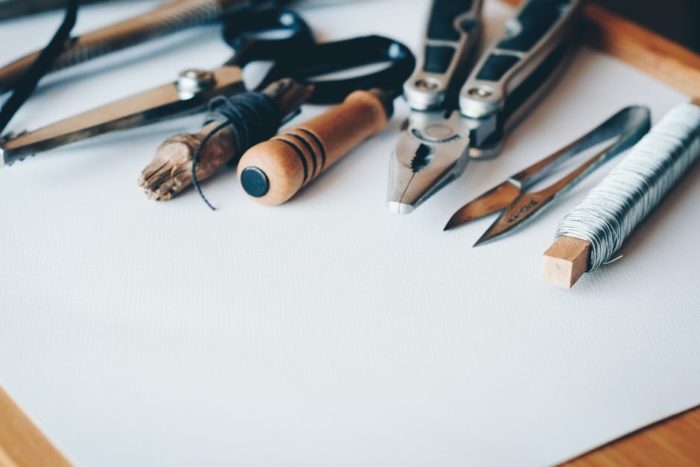
Of course, you can’t be an innocent bystander for your entire life. Eventually, you’ll need to get in the trenches and start helping out! If your friend that’s working on a project that involves tools, ask if they can show you how they work and when to use them. It can be intimidating to pick up a power tool for the first time, but it’ll be more straightforward if you’re picking up when you have an experienced handyperson next to you. Once you’re used to them, you’ll be able to start thinking about the own projects you can start.

Getting the Right Equipment

A worker is only as good as his or her tools, or so they say, and as a result, it’s important that you buy the ones that are right for you when you begin building your tool collection. If you don’t know where to start, take a look at Tool Nerds. There, you’ll find an overview of the tools that you’ll need to have, as well as advice on which ones will be the best for you to purchase. It’s crucial that you get the specific tool for a job because otherwise, you might find that it’s botched – and through no fault of your own.

Picking a Project

Now that you’ve got a grounding of the essential skills you’ll need and a set of tools at your disposal, it’s time to start thinking about getting your DIY career truly underway by tackling your first project. What this will be is up to you – and the needs of your house – but there is a word of warning: it’s essential that you start small. If you try to take on a project that’s too big, you’ll only end up in a confusing mess. Indeed, you may put yourself taking on any more projects before you’ve even completed your first one!

Online Resources and Other Help

Just because it’s called ‘Do it Yourself,’ that doesn’t mean you have to think of yourself as the complete handy person. There are many resources out there that can help you every step of the way during your project. Indeed, here’s a well-kept secret: a lot of the people who claim to brilliant at DIY projects actually get a lot of help from YouTube channels! This will be especially useful for you, a person in the early stages of DIY, as you’ll be able to walk along with someone else and will know pretty quickly if you’ve made a mistake.

Priority on Safety

You might be excited to get your hands on tools and start work, but remember that DIY projects, no matter how small, have the potential to be dangerous. And of course, this danger is only amplified when there are heights or powerful tools involved. As such, it’s important that you’re taking all the necessary safety precautions. Before using a tool, read up on the best practices. When you’re working in a room, make sure all obstacles and other hazards have been well cleared away. The rest is common sense: always keep an eye on safety!

More Ambitious Projects

It’s always important to think clearly about any major changes to your homes. It’s even more essential when you’re in charge of the task yourself! Some projects will have the potential to add value to your home, but some will actually make it harder to sell in the long run. As such, it’s worthwhile to look up the long-term effects of your project before you begin anything too ambitious.

Source: Pexels.com

Meticulous Planning

No matter if it’s the most DIY task or a more complicated project, arguably the most important step of the whole process will happen before you’ve even got to work. Everything is in the planning stages. Simply put, if you walk into a project with just a vague understanding of the result, you won’t end up with something you’re happy with. Make sure all your measurements are the like are watertight: it’ll be difficult to correct when you’re too deep!

How to Fix Errors

And talking of making mistakes: you are going to make them. Don’t worry, everyone makes mistakes in DIY, especially when they’re just starting out. If this happens, take a step back and assess the situation. Is it something that you can fix yourself, or will you need to get the professionals to help?

Smile on the Face

Ultimately, it’s important to remember that DIY isn’t supposed to be stressful, even though it can often like it. Try to have a relaxed attitude to the whole thing: it’s not that serious! Have fun, and you’ll be putting yourself under a lot less pressure to get everything right the first time.

Categories

Design by SkyandStars.co

Copyright © 2026 · LovePeace Theme by SkyandStars on Genesis Framework · WordPress · Log in